

13·
9 hours agoIn this economy, we can’t afford to just burn perfectly good RAM. Angry mobs should always remember to pillage first, then burn.
In this economy, we can’t afford to just burn perfectly good RAM. Angry mobs should always remember to pillage first, then burn.
They’ll still be available. They’ll just be prohibitively expensive for the average person, because their cost won’t be subsidized by the data collection.
Your TV example is actually great, because you can easily get a dumb TV… As long as you’re willing to pay 3x as much for it. Commercial displays are meant to be used for things like digital signage in lobbies, digital menus in restaurants, meeting room displays, hospital patient listings at nurse stations and patient TVs inside of each hospital room, etc… They’re truly dumb displays (sometimes they have things like wireless display mirroring and AirPlay ready to go, to make things like meetings easier), and they don’t have any data collection. But they’re more expensive, because the corporate clients are paying for reliability and consistency.
Because corporate clients are concerned with things like HIPAA violations at a nurse’s station, and corporate espionage. Imagine if patient info leaked because a smart TV was listening to nurses conversations and running OCR on the patient info displayed on the screen. Imagine if corporate secrets leaked because a meeting room TV was sending screenshots of a PowerPoint presentation back to the manufacturer.
So yes, dumb appliances are 100% still going to be available. They simply won’t be affordable, because individuals aren’t the target market. The target market is corporate clients. Dumb fridges will still be a thing in professional kitchens, because no restaurant manager wants to deal with a smart fridge. But that dumb fridge will be designed with professional kitchens in mind. It won’t fit in a standard house’s kitchen, because it’s not designed for that.
That’s the joke. Tech companies have started taking away basic functions, so they can then sell it back to you as a subscription. BMW’s heated seat subscription comes to mind. All BMWs are equipped with heated seats by default, but you can only turn the heater on if you pay a subscription for it.

The funniest one is the mushroom that makes you see tiny people for like a week. It’s not like psilocybin that causes different visuals depending on the person. As far as we can tell, the only visual hallucinations that these mushrooms produce are just… Tiny people. Like little Smurf-sized people on every surface, clinging to your clothes, climbing up walls, etc…
Secondly cashapp patel said that the animal would also not be disqualified
Specifically, he said that current laws automatically disqualify both victims and perpetrators of sex crimes. For instance, both a pimp and his trafficked prostitute get charged with crimes. Kash said the law currently targets both parties. The senator then turned that around and went “so in cases of bestiality, the animal is the other party? And the animal could be hired by the FBI?” And Kash basically went “I mean… I guess if you want to put it like that?”
In reality, if a trafficking victim is being forced into bestiality, the animal wouldn’t be the “other party” in this case. The other party would be whoever is forcing the victim into doing it. But the senator wanted their “Kash says FBI will hire rapist animals” soundbite, and Kash happily gave it to him because he’s a fucking idiot.
I dislike Kash, (he always looks like someone is slowly but steadily inserting hardboiled eggs into his ass, and he’s trying not to react to it), but as the above poster said, the actual reasoning behind the decision isn’t awful. Trafficking victims often get charged with sex crimes under our existing laws, because the laws don’t make a distinction between victim and perpetrator. If you get caught for prostitution, the law isn’t going to care that you were trafficked and forced into it. Which then makes escaping the situation even harder because those arrests will show up on a background check when they apply for jobs. In that way, the system is actually designed to keep the victim in sex work, because it’s one of the few ways they’ll have to make money after being charged with a crime.
It’s technically opt in, but they do the whole “you can’t use most of the TV’s functions unless you opt in, and we’re going to remind you of that every day or two until someone using the TV eventually hits Accept” dark pattern BS.
Yeah, this photo was actually one of the things that he credits with helping him get clean. Because this was basically rock bottom for him, and seeing this photo in tabloids was a large part of what made him realize how bad his addiction truly was.
He did the same thing that a lot of addicts do, and basically did a full 180 into health and fitness instead. Basically replaced the drug high with a workout high.
Hell, I vividly remember the old /u/ViolentAcrez thing, and tons of users being butthurt when subs like /r/Jailbait, /r/CreepShots, and /r/Upskirting were taken down.

And this is actually how I’ve said it should be done from the start, though those ages are too granular for my taste. Just allow the user to verify their age once, then it shares a broad (child/teen/adult) age range with whatever asks.
We even have the technology to securely verify a person’s age without sharing any details, the same way we can share a password without actually storing it directly. It would require governments to actually pull their heads out of their asses and be technologically literate, but it could 100% be done:
Step 1, the government sets up a public database query. This simply returns a “true/false” response for if a hash matches their database of people over 18. Have people set up a password or PIN directly with the government (probably when they’re applying for an ID, which they would need to verify their age anyways), to act as a salt for their personal info hash.
Step 2, the user who wants to verify their age enters their data and password on their device. This info never leaves their device. It is hashed, and sent to whatever service their device is trying to verify. Google account, iCloud account, Microsoft account, etc… It can even be a local user account for things like Windows or Linux machines that don’t want to use cloud accounts. The important part is that the info is never directly sent, only the salted hash is. And simply using the info on a stolen ID won’t help, because you don’t have the password so the hash will be wrong.
Step 3, this hash can then be used to query that database, to see if the user is over 18. Again, the government simply returns a basic true/false on whether the info matches something in their database. It doesn’t give any specific info about the person. The service (whatever it may be) never gets your personal info, because they only saw the salted hash. And the government doesn’t need to know what specific device or person is trying to verify, because they only saw Microsoft/Google/Apple/etc asking “hey, does {hash} match your hash database?”
Step 4, once the query returns as true, the account is now flagged as age verified. This flag can be set directly on the account, so any device the user logs into can automatically be verified without needing to repeat the process.
On the user’s end, they get a much smoother experience. They never need to deal with the “are you over 18” pages on porn sites. And they don’t need to verify each individual site. The site simply asks if the user is over 18 as part of the initial https handshake before the webpage even loads. And then it boots the user (or more realistically, redirects them to a SFW “your device isn’t age verified, here is how to do that” page) if the user isn’t verified. And once a user is verified, it can be logged directly on their account so that they don’t need to verify each individual device. Your iCloud/Google/Microsoft/etc accounts could simply have the age flag added to your account, so any device you log into is automatically verified.
And importantly, parents protecting their kids is as simple as refusing to age-verify their kid’s accounts. By default, everything assumes you are a child until proven otherwise. Protect your password (which you should already be doing anyways) and your kid can’t sneak into your purse to use your ID to secretly verify themselves. Hell, you can even allow verified users to create specific child/teen accounts for their kids, which can be trusted without needing to re-verify anything. Because (again) that is simply a tool for parents to use if they feel like they should. By default, everything is assuming you’re a child anyways.
But of course, this is all a pipe dream. It will never actually be implemented in a sane way, because the tech companies are the ones pushing for age verification. They want to be the ones to handle your data, which means they’ll actively rebel against anything that takes that away from them. They’d lobby governments to prevent the hash database system from being implemented, because it would prevent them from being able to collect your data directly.

The em dashes always give it away tbh. Anything “coded” by this user would 100% be slop. If they can’t even be bothered to think of a pitch for it, why would they think of the code?

I’ve said that taxes should increase drastically after you own two residential properties. Allow two for the people who own things like a home and some separate farmland, or maybe a lake house. The point is that companies shouldn’t be able to buy and sit on vacant properties, just to drive up costs. We’re not targeting the people with two houses, we’re targeting the people with two hundred.
After those two allowed properties, taxes increase at a scale, so nobody will want to sit on dozens of homes for long periods of time. And (here’s the important part!) if an owned house is vacant for more than 4 months (120 days) in the calendar year, the taxes on it skyrocket. Hell, make it exponential. This Vacant Property tax should fucking hurt. It should be the thing that keeps Zillow executives awake at night. This will encourage people/companies to sell or rent their vacant houses, instead of sitting on them indefinitely and passing costs onto the few people who they’re renting to. And that “owned property” count used for the property tax calculation should also include residential properties owned by subsidiary companies, shell corporations, etc… Don’t allow companies to spin up a thousand shell corps just to hold two properties each.
This will drive down purchase prices and rent prices, because it would be financially smarter to have a cheap renter when compared to paying the exorbitant taxes on a vacant property.
And then take the funds collected from these additional property taxes, and put it towards firsttime homebuyer incentives, rent assistance programs, homeless/displaced/battered/etc shelter funding, etc…

I actually enjoyed the Pattinson Batman movie. It was a callback to the Detective Comics origins. Hollywood tends to focus on the action, but Batman in the comics is first and foremost a detective. So the Battinson movie was focused on that. And for most of the movie, he was basically just a dude in a hoodie with a bike, riding around town looking for clues. The Riddler was a great villain for that kind of movie, and doing it any other way would have reduced Riddler’s entire character to just another punching bag.
It’s an old meme, based on a series of Facebook screenshots:
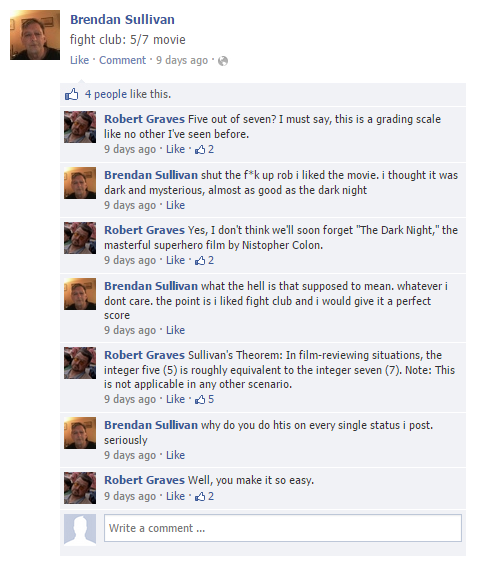
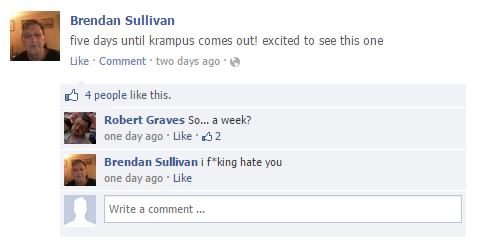
Once the screenshots went viral, people started memeing about it, like so:
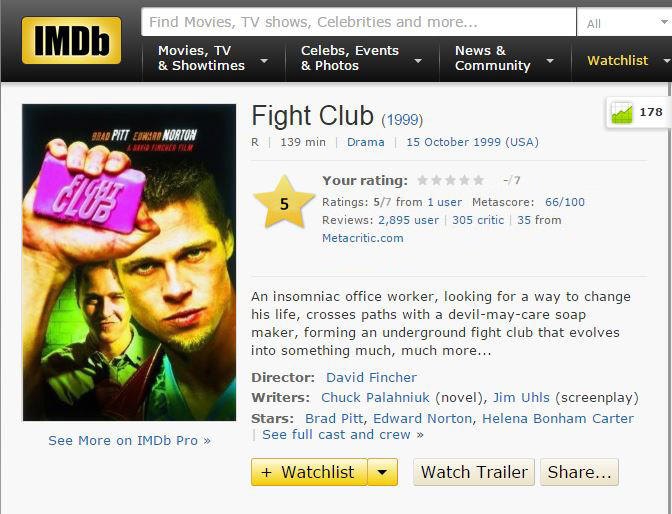
As for why the 5/7 was posted here? Probably because OP was asking about the Nolan trilogy, which is mentioned in the original 5/7 meme.
I guess we doin lean now

Oh, I agree. My point was simply that if a restaurant is trying to ditch the “mom and pop” vibes and get professional photos for their menus, it’s not something that is done on a whim. It’s not just a “snap a pic with your phone and post it on your menu” type of thing if a restaurant is trying to look like more than a family owned joint.
And that’s before we even get into the actual menu design, because a well-formatted menu is designed to draw customers towards the most profitable items. All of those highlighted and “chefs special” menu choices that are in big bold bright letters in the center of the menu, with accompanying pictures? Yeah, the restaurant has done the math on the raw ingredients and prep time for each menu item, and those featured choices are the items that are most profitable for the restaurant to make. The goal is to encourage people to buy the things that make the most money. Those small menu options that are tucked away in the bottom of the menu like a footnote? Those are the least profitable. A good menu layout can increase dine-in profits by upwards of 10-20%, simply by encouraging people to order the most profitable items.
And while I don’t agree with using AI for the food images, I can see how a restaurant manager would balk at a $10k professional food photographer bill. Especially when that also requires closing the restaurant for a day, (meaning a day of lost profits) so the photographer can work with the cook staff for the photos during a dedicated photography session. Why would they eat that massive cost, when they could generate a “good enough” (meaning the majority of people won’t notice or care that it is AI) image for free in a few minutes? Again, I don’t agree with it, but I can see why a restaurant manager would see it as an attractive alternative.
I used Google Timeline to prove I was at work one time. This was back when I was freelancing. My client tried to say I was stealing time, because I had an off-site meeting that ran long. They were threatening to withhold a few hours of pay, even though I was at the worksite the entire time. I pulled up my timeline and used it to prove that I was, in fact, at the meeting site for an extra few hours. Being able to de-Google that functionality has a lot of value to certain people.
Food photography is actually an entire branch of photography, and a lot of the photos you have historically seen haven’t been real edible food. For example, the milk in the bowl of cereal on your cereal box? That’s usually white Elmers Glue. Because real milk won’t sit below the cereal, and will be too watery. It also allows them to precisely set the individual cereal pieces (rings, flakes, etc) in place and the glue will help prevent it from floating around.
The ketchup on a burger is usually thick red paint, applied around the edges of the rubber pickle with a syringe. Because they want to make sure the ketchup looks like it’s squeezed around the pickle (rather than being squished into the burger bun), and they want to make sure the ketchup is showing around the pickle juuuust enough to be obvious, without obscuring the pickle.
The funny part about food photography is that the methodology is largely regional. For example, Japanese audiences largely expect a burger photo to have the bun sliding off of the burger, like so:
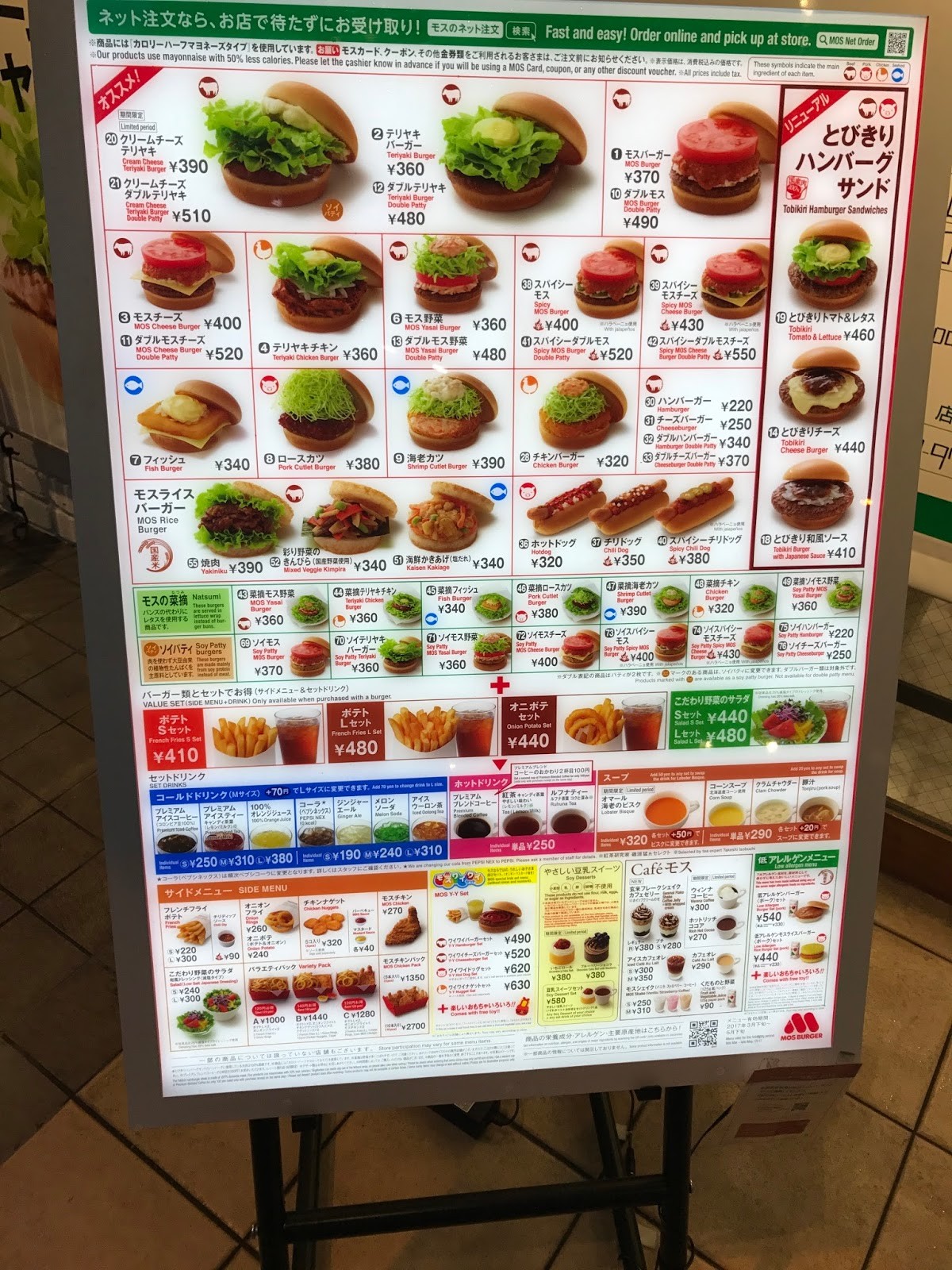

Originally it was done to prevent the bun from obscuring any of the ingredients. But now it is a sort of cultural thing, where lots of menus do it simply because that’s what the other menus do. But it also means that Japanese burger photography is done using different materials and methods than western burger photography. But to use the second image as an example, that runny egg yolk on the right burger is probably some sort of inedible yellow paint. Because the photographer wants controllable color and consistency, and cooking is rarely consistent enough for that. The glaze on the meat is probably some kind of clear-coat rosin or spray. The egg was probably cooked hard and then sliced with a scalpel to create that perfect wedge slice for the yellow paint to be added. Etc…
My partner is a clutz, and I always joke that her Coffee Table Detector (little toe) is working great. It always earns me a death stare while she’s reeling, but being momentarily pissed at me is usually pretty effective at distracting her from the fact that her toe hurts.

Something something Four Boxes of Liberty.
For the unaware, the Four Boxes is a concept that describes the four ways the average person has to impact public policy. The first is the soap box. Use your voice. If that soap box is taken away, you move to the second box.
The second box is the ballot box. Even if you’ve been silenced (via things like shadowbanning, having your content suppressed, being prosecuted for talking about it in public, etc) then you can still vote to enact change. Ideally, your representative would represent you and push for the change you want.
The third box is the jury box. If someone is on trial for a crime that was morally justified, the jury can simply refuse to find them guilty. For instance, if someone is on trial for cutting down a Flock camera, the jury would be fully within their rights to find them innocent despite all evidence. Once enough people support a particular change, a jury can reliably grind the cogs of the legal system to a halt.
And the last box of liberty is the ammo box. If all else fails, they have removed jury trials, representatives don’t represent the people, people aren’t free to discuss change, etc, then the ammo box is the last resort.
With regards to this specific incident, we’re somewhere between the third and fourth boxes. An angry mob burning down a data center is solidly in the fourth box, and the third box will come into play once prosecutors start trying to charge individual people with crimes because of it. But it’s important to remember that the third and fourth boxes were only touched because the first and second boxes failed.