

Also at @me@social.k3can.us on Mastodon. Blog is at blog.k3can.us

  • 2 Posts
  • 20 Comments
Joined 3 years ago
cake
Cake day: June 21st, 2023

help-circle

  • If you’re talking about remote access specifically, I use tiers.

    “Public” is open, but goes through crowdsec and anubis, and is on a DMZ network. This is my website, blog, Fediverse, etc.

    “Private” is either secured with mtls or wireguard. This is stuff that’s only for me or family, like media or home assistant.

    “Sensitive” is wireguard only. This is infrastructure management, Paperless, etc.



  • Oh, maybe I misunderstood? It sounded like he didn’t understand what advantage a “tunnel” could provide.

    If your server is behind CGNAT, you need a TURN-style “tunnel” to allow incoming connections. If you have your own remote server with a public IP, then you can absolutely use that and create the tunnel using wireguard (or openvpn, ssh, etc).

    I just mentioned CF in my blog post because it’s probably the most popular solution.

    The point is, if you have CGNAT, you need to create that “tunnel” somehow if you want to allow incoming connections.


  • Sorry, I think I misread the comment when I made my initial reply.

    Edit:

    If you mean the key provided for the demonstration, you could ensure that you get the correct one by checking the signature (it’s signed by my personal key) or by doing the initial download through i2p or tor. Once it’s added to your keyring, you maintain that same key for all the subsequent checks. Or, if you don’t want to do either, you could consider it as a Trust-on-first-use system.

    The important point is that it’s a layered system, rather than a single point of trust, and that once you trust it, it cannot be compromised.


  • K3CAN@lemmy.radiotoSelfhosted@lemmy.worldRevisiting Rule #3
    link
    fedilink
    English
    arrow-up
    6
    ·
    4 months ago

    I’m a bit torn on the hardware bit, myself.

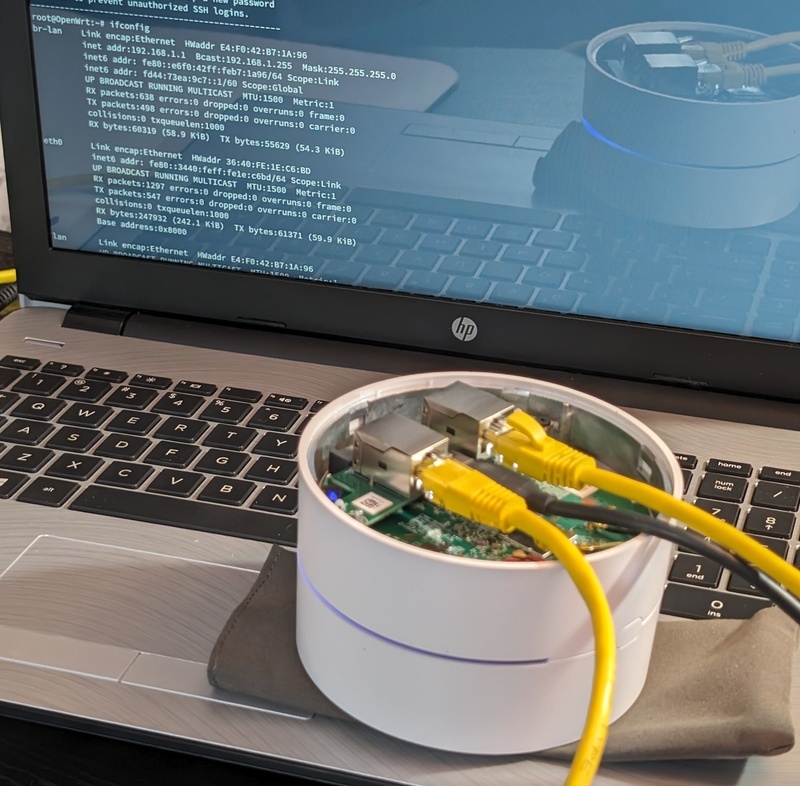
    On one hand, hardware is a fundamental aspect of self hosting. There’s already a portion of the community who considers self-hosting to include using commercially-hosted cloud services (as long as it’s not Google), so prohibiting hardware discussion just reinforces that concept. Plus, it can be really fun to see what creative hardware people come up. I’m pretty sure I posted about my Fediverse server running on a WiFi router here, for example. The focus was on the unusual hardware, but it was also clearly related to self-hosting.

    On the other hand, looking at what is posted in other communities, I don’t think there’s a ton of value in seeing a dozen photos of a bone-stock rpi or a closed laptop sitting on a desk. Same with the nth post asking if their 30-year-old 1u would be a good choice for Jellyfin; so I see why the rule exists.

    Overall, though, I think hardware should be allowed, but maybe add a rule along the lines of “if you’re posting a question, please include what resources you’ve already reviewed or troubleshooting steps you’ve already taken.”

    Heck, that might be a good rule for all questions, regardless of topic…