

7·
9 days agoNice work OP. Clean and sharp. These mini servers are awesome.

Incessant tinkerer since the 70’s. Staunch privacy advocate. SelfHoster. Musician of mediocre talent. https://soundcloud.com/hood-poet-608190196
Nice work OP. Clean and sharp. These mini servers are awesome.
Way to head them off at the pass. Rock on with yo bad self.
'Sup bro. It seems I need to update. Thanks for the heads up. I’ve been enjoying CookTrace so far.
About the only recent even I’ve had was when I was sitting at my desk reading an article. I noticed the mouse slightly move, but I hand no hand on the mouse. I sit there watching it, not manually moving the mouse or typing on the keyboard. It really freaked me out. Turns out, my old desk pad had a slight curl towards the edge the mouse was at, and the curl would make the mouse sense movement ever so slightly. I deployed a new desk pad, and things are back to normal. Whew!
I like it. The OCD in me is screaming why you didn’t use a dremel tool to cut the slot for the USB ports instead of using a rusty, dull, steak knife from the junk drawer, but that’s just me. LOL
I hear a lot of chatter about CGNAT. How common is that? Anecdotally, I’ll have to say, I’ve never encountered it… ever.
The scripts targeted an ownCloud instance operated by a nuclear research body
Maybe it’s just me, but I think if I were running a nuclear research facility, I’d want a little something more than ownCloud, and neat as it is.
Gravity looks pretty cool, tho a bit heavy on the install. TapMap: Why are these things such a garish shade of green? Damn hard on the eyeballs.
I was reading a homelab discussion about NUTs (Network UPS Tools) that left me scratching my head and wondering "…why? Is complexity for complexities sake part of homelabs? Isn’t this a huge overkill for one machine? Just…use a UPS? "
I think it’s like anything else people do. Some are quite satisfied at a moderately basic level. Others tho, implement K8 clusters, etc, a complexity level I have no interest in. Take golf for example. I used to play quite regularly. I had a raggedy old bag and some beginner level clubs I bought third hand. My buddy had every golf gadget you could possibly imagine. Thousands of dollars to whack a ball around a course and into a hole, on an amateur level. I’m thinking, ‘Dude, this isn’t the Masters Tournament at the Augusta National. We’re just whacking balls into holes and having a few beers on the weekend’ . But, every time we got together, he just had to show me his new gadget that cost him hundreds of dollars and added even more complexity to the game.
I tried QubesOS back in the day. How has it progressed as a desktop. I was always underwhelmed visually. It just seemed rather chunky. Maybe that is intentional.

Of course, if you are going for security, that’s great, but it seemed to me that security and a visually appealing desktop could be blended.
I’m higher than a giraffe’s butthole, so I got to know: Exactly what were you staring at when you opened the picture? I kid of course, but I found that quite risible.
Ahh ok…well, there you go. Fresh out Don Curbstickle. Maybe next time.
I wonder if you could pair your phone with your DSLR so that you have access to GPS location tagging.
Monitoring firewall logs would show calls to suspicious IPs and domains after you pulled the Docker container. A MiTM attack is usually conducted between two communicating parties, rather than inside the server itself. The attacker intercepts traffic as it travels across a network or service path. MiTM are not always done exterior of the server, but usually. Strong ciphers are your friend. Although MiTM and PIC events can overlap, a PIC is usually an attacker gaining unauthorized access to a system. A PIC compromise occurs outside the public facing server, through a stolen administrator password, compromised developer workstation, exposed API key, or hijacked cloud account. Securing API, devices, frequent password rotation are good practices. Again, not always exterior of the server, but usually.
What do you (or does your org do) to ensure that you’re not using maliciously-modified containers after pulling a new docker image?
I don’t run a complex setup as it seems you do, but if I pull a new Docker container, I closely monitor my pfsense firewall logs. A lot of times, I’ll deploy a recently released container on a small test server and just observe as I run it through it’s paces. Also, I like containers that have a rather established history. I look at things like stars, how they handle bug complaints, etc. Even when updates come out, unless it’s a dire security patch, I’ll wait until all the early adopters work out the bugs and do my work for me. Early adopters are a valuable resource.
I guess you could say it all comes down to calculated risk.
capitalist mindset
I’m a capitalist. I run three bonafide, tax paying businesses. They allow me to live moderately comfortable. Money makes the world go 'round. I’ll never be a billionaire, but I do love me some money. Sure, the best things in life may be free, but the grocery store isn’t giving away groceries.
Don’t take it to seriously
Too late. LOL Thank you for sharing.
Opensense is often bound by single-core operations depending on where a network packet may plumb itself through the kernel
Didn’t downvote, but when would this become an issue? Pfsense is about the same way as far as single-core operations, tho IDS/IPS like Suricata can utilize multiple threads. My standalone pfsense box sits between my modem and the rest of the network. I haven’t noticed any sluggishness or stuttering. Throughput seems quite reasonable, and supports a diverse group of devices attached to the network.
Well, there you go. I’m glad I plowed the field and saved you the embarrassment. LOL
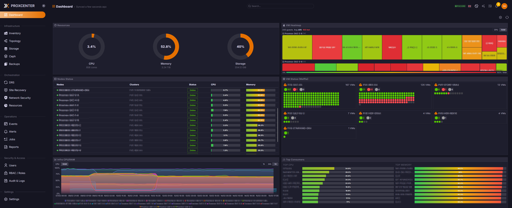
I tend to go overboard on security, or so I’ve been told.
https://lemmy.world/post/43533409